
High-Protein Creamy Mustard Salmon
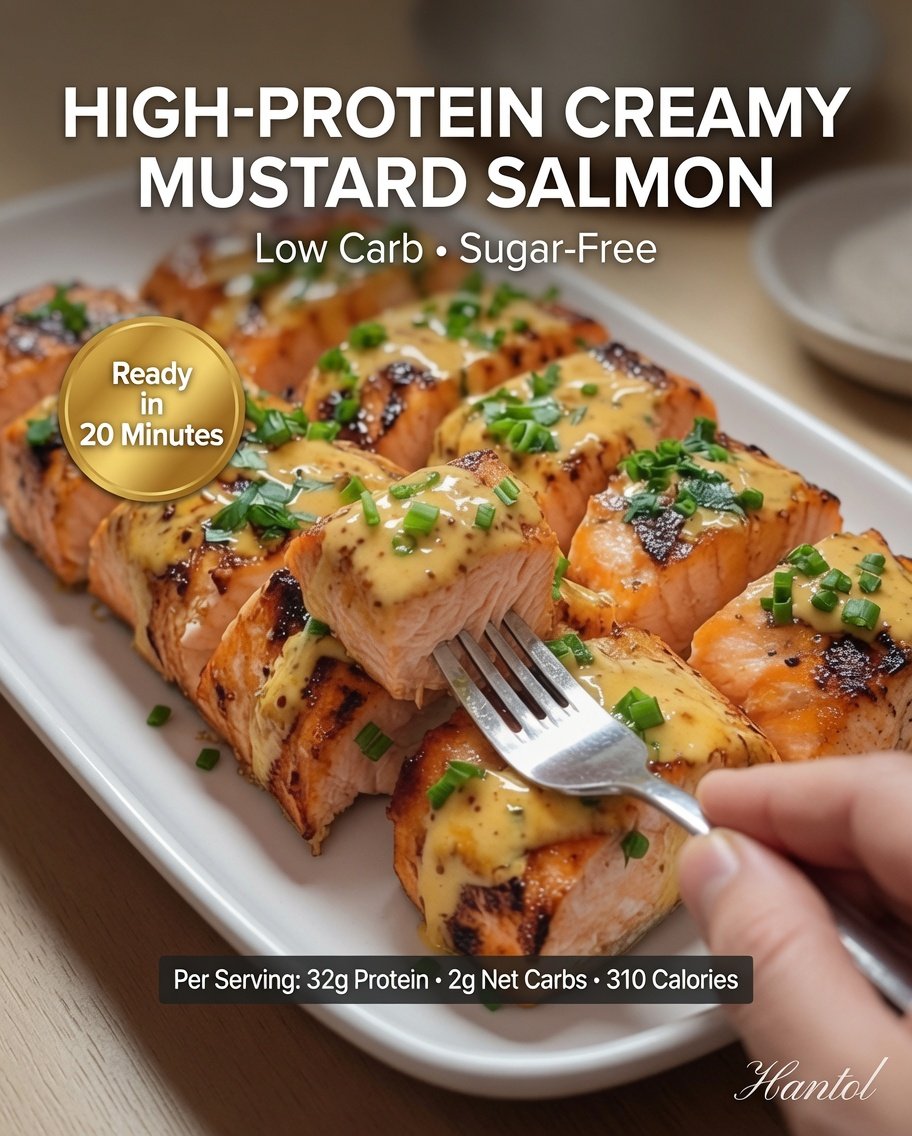
Tender pan-seared salmon topped with a creamy Dijon mustard sauce — low-carb, sugar-free, and ready in 20 minutes
This high-protein creamy mustard salmon is juicy, flavorful, and finished with a silky Dijon cream sauce. Quick searing gives the salmon a beautiful crust while the sauce comes together in the same pan. Every serving delivers 32 g of protein and only 2 g net carbs.
Low-carb, sugar-free, and perfect for a fast weeknight dinner.
Why you’ll love this salmon
- 32g protein per serving — a complete high-protein meal
- Only 2g net carbs and fully sugar-free
- Creamy Dijon sauce that comes together fast
- Ready in about 20 minutes
- One-pan and minimal cleanup
- Elegant enough for company, easy enough for weeknights
Health notes
- High protein: Salmon is naturally rich in protein and healthy fats.
- Low carb: No flour or sugar in the sauce.
- Sugar-free: Dijon and cream keep the carbs low.
- Fast: Sear and sauce in the same skillet.
Key element — don’t overcook the salmon
Cook until the center is just opaque and flakes easily. Overcooking dries it out. Pull it a minute early if needed — residual heat finishes the job.
New High Protein Recipes
High-Protein Creamy Mustard Salmon
- Prep5 min
- Cook15 min
- Total20 min
- Servings4 servings
- Calories310 kcal
Ingredients
Instructions
- Season the salmon. Pat the fillets dry and season both sides with salt, pepper, and optional garlic powder or paprika.
- Sear the salmon. Heat the oil in a large skillet over medium-high heat. Place the salmon skin-side up (or presentation-side down) and cook 3–4 minutes until a golden crust forms. Flip and cook another 3–5 minutes until just cooked through. Transfer to a plate.
- Make the sauce. In the same skillet, reduce heat to medium. Add the butter and garlic; cook 30 seconds until fragrant. Pour in the cream and both mustards. Simmer 1–2 minutes, stirring, until slightly thickened. Season with salt and pepper. Thin with a splash of broth if needed.
- Finish and serve. Return the salmon to the pan or spoon the sauce over the fillets. Garnish with chopped chives or parsley and serve immediately.
Notes & Tips
- Pat the salmon very dry for the best sear.
- Don’t move the fillets for the first few minutes so a crust can form.
- Taste the sauce and adjust the Dijon — some brands are sharper than others.
- If the sauce gets too thick, loosen it with a splash of broth or cream.
- Leftover sauce is excellent over zucchini noodles or roasted vegetables.
Variations & serving ideas
- 1 Tbsp butter
- 2 garlic cloves, minced
- ½ cup heavy cream
- 2–3 Tbsp Dijon mustard (to taste)
- 1 tsp whole-grain mustard (optional, for texture)
- 1–2 Tbsp chicken broth or water (to thin if needed)
- Salt and black pepper to taste
- Chopped fresh chives or parsley for garnish
- Dairy-free: Use coconut cream and a dairy-free butter alternative.
- Spicy: Add a pinch of cayenne or a dash of hot sauce to the sauce.
- Herbier: Stir in fresh dill or tarragon at the end.
- Oven method: Bake the salmon at 400°F (200°C) for 12–15 minutes, then make the sauce on the stovetop.
- Honey-mustard style: Add a small amount of sugar-free honey substitute or a pinch of sweetener for a milder, slightly sweet sauce.
- Lemon mustard: Finish the sauce with a squeeze of fresh lemon juice and a little zest.
- Garlic herb: Add extra garlic and finish with fresh dill or parsley.
- Sheet-pan: Roast the salmon on a sheet pan, then drizzle with the quickly made stovetop sauce.
Storage
- Refrigerator: Up to 3 days (Store covered)
- Freezer: Up to 1 month (Freeze without sauce if possible; reheat gently)
- Reheat: Low heat or microwave (Add a splash of cream or broth to loosen the sauce)
Nutrition Facts
Per serving · makes 4 servings
| Nutrient | Amount per serving |
|---|---|
| Calories | 310 kcal |
| Total fat | 19 g |
| Sodium | 420 mg |
| Total carbohydrate | 2 g |
| Fibre | 0 g |
| Protein | 32 g |
Nutrition values are approximate and vary with brands and portion sizes.
Frequently asked questions
Is this salmon keto-friendly?
Yes. At only 2g net carbs per serving it fits easily into most keto and low-carb plans.
Why is my salmon dry?
It was likely overcooked. Pull it when the center is just opaque and still slightly translucent in the very middle.
Can I use frozen salmon?
Yes. Thaw completely and pat very dry before searing so you still get a good crust.
Can I make the sauce ahead?
Yes. Make the sauce and reheat gently with a splash of cream. Cook the salmon just before serving for the best texture.
What mustard works best?
Dijon is classic. A mix of Dijon and whole-grain mustard gives both creaminess and texture.
Can I bake the salmon instead?
Yes. Bake at 400°F (200°C) for 12–15 minutes, then spoon the quickly made sauce over the top.


Comments
No comments yet. Be the first!