
Butter-Poached Lobster Tail
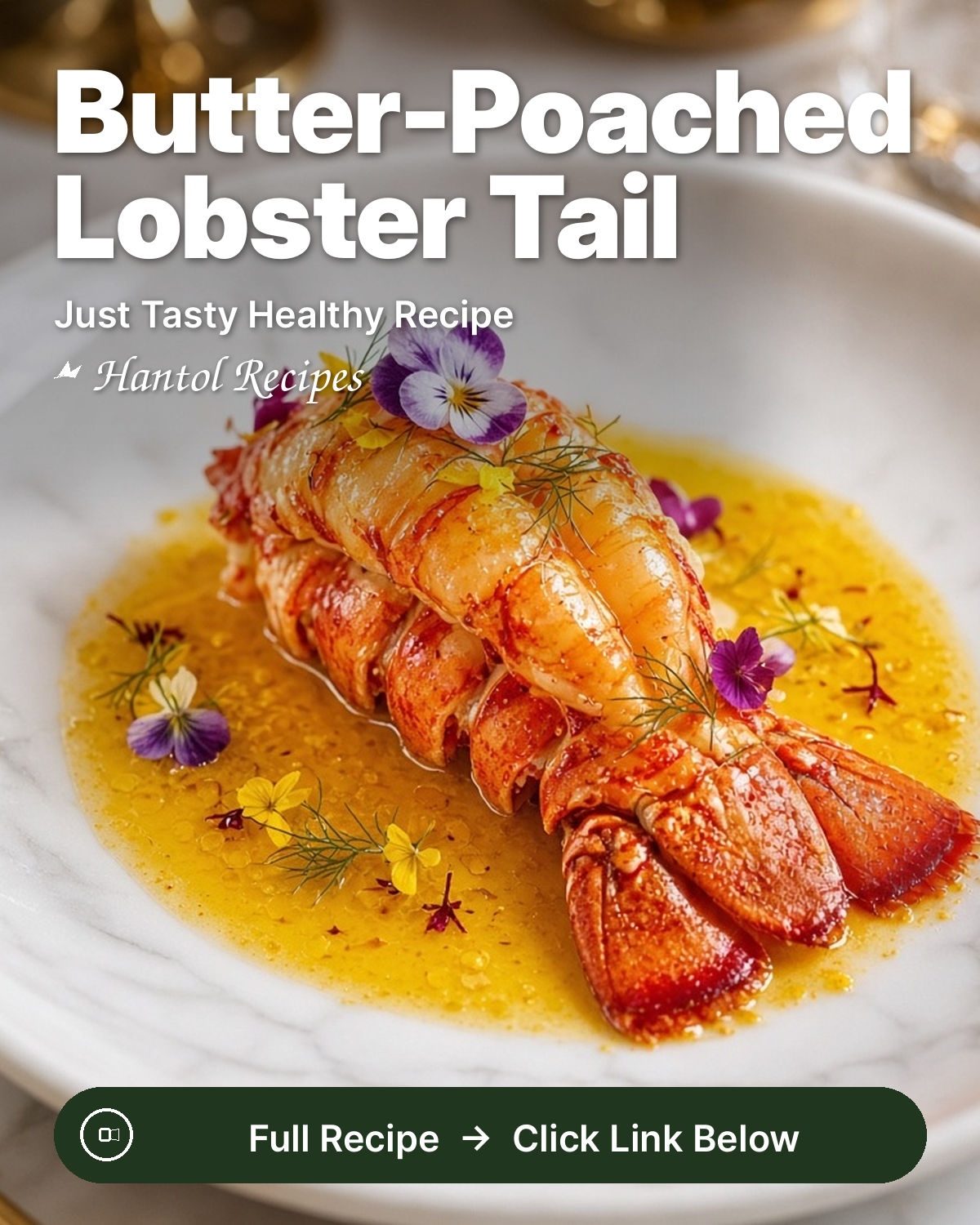
Butter-poaching is the gentlest way to cook lobster. The tail simmers slowly in warm butter — never boiling — until the meat turns silky, sweet, and impossibly tender. Just like the photo, it's served right in that golden butter with delicate herbs and edible flowers. Pure luxury, zero stress.
Why You'll Love This
Silky, tender lobster in golden butter, just like the photo.
Nearly impossible to overcook — gentle heat is forgiving.
Ready in 25 minutes with just a handful of ingredients.
Naturally high protein and low carb.
The ultimate special-occasion main course.
Anti-Inflammatory & Mediterranean Recipes
Butter-Poached Lobster Tail
- Prep10 min
- Cook15 min
- Total25 min
- Servings2 servings
- Calories480 kcal
Ingredients
Instructions
- Prepare the lobster: use kitchen scissors to cut along the top of each shell. Gently pull the meat out in one piece, keeping it attached at the tail end if you like. Remove the dark vein. Pat dry and season with salt and white pepper.
- Build the poaching butter: put 2 tbsp water in a medium saucepan over medium heat. Whisk in the butter a few cubes at a time, letting each batch melt before adding more. You want an emulsified, creamy liquid — not separated melted butter.
- Add the garlic, thyme, and bay leaf. Keep the heat low. The butter should stay at 70–80°C (160–175°F) — steaming gently, never bubbling or boiling.
- Lower the lobster meat into the butter. Poach 6–8 minutes, turning once, until the meat is opaque and just firm.
- Lift the lobster out with a slotted spoon. Stir the lemon juice into the butter.
- Spoon a pool of the poaching butter onto warm plates. Set the lobster tail on top.
- Garnish with dill fronds and edible flowers. Serve with lemon wedges.
Notes & Tips
- Temperature is everything. If the butter boils, it breaks and the lobster toughens. Keep it at a bare shimmer.
- Add the butter gradually over water. That emulsion is what makes it poach instead of fry.
- A thermometer helps the first time. Aim for 70–80°C.
- Don't discard the poaching butter. It's liquid gold for pasta, risotto, or dipping bread.
- Serve on warm plates. The butter sets quickly on cold porcelain.
- Nutrition: Per serving (estimate):
- Nutrition: Net Carbohydrates: 2g
- Nutrition: These are estimates and will vary with exact ingredients and portion sizes. Note: most of the butter stays in the pan — actual fat absorbed is much lower.
- Serve immediately. Poached lobster doesn't wait well.
- Fridge: leftovers keep 1 day, chilled in the poaching butter. Reheat very gently.
- Save leftover poaching butter up to 3 days in the fridge. Use for seafood pasta or scrambled eggs.
- Do not freeze cooked lobster — the texture suffers badly.
- The Secret to Silky Poached Lobster
- The secret is the emulsion and the temperature. Melting butter over a little water, a few cubes at a time, creates a stable creamy bath instead of separated oil. Hold that bath at 70–80°C — hot to the touch but never bubbling. At that gentle heat the lobster proteins set slowly without squeezing, so the meat stays plump, juicy, and silky. Boiling butter would fry the surface and turn the inside rubbery. Low and slow is the whole game.
Variations & serving ideas
- Budget option: use large prawns or monkfish pieces — both poach beautifully in butter.
- Dairy-free: use olive oil poaching instead — same low temperature, same method.
- Flavored butter: add saffron threads, chili, or tarragon to the butter.
- No edible flowers: skip them — they're purely for looks.
- Whole lobster: this method works for claw meat too, poached 4–5 minutes.
Nutrition Facts
Per serving · makes 2 servings
| Nutrient | Amount per serving |
|---|---|
| Calories | 480 kcal |
| Total fat | 38 g |
| Sodium | 580 mg |
| Total carbohydrate | 2 g |
| Fibre | 0 g |
| Protein | 30 g |
Nutrition values are approximate and vary with brands and portion sizes.
Frequently asked questions
How do I know when the lobster is done?
The meat turns fully opaque and feels just firm when pressed. An instant-read thermometer should read 60–63°C (140–145°F) in the thickest part.
Can I reuse the poaching butter?
Yes — strain it and refrigerate up to 3 days, or freeze up to a month. It's incredible tossed with pasta or used to cook scallops and prawns.
Why did my butter separate?
The heat was too high. If it breaks, take the pan off the heat and whisk in a tablespoon of cold water or an ice cube to bring the emulsion back together.
More questions about this recipe
How long does it take to make Butter-Poached Lobster Tail?
About 25 minutes in total: 10 minutes of prep and 15 minutes of cooking.
What ingredients do I need for Butter-Poached Lobster Tail?
The key ingredients include garlic, lemon, thyme, dill fronds, lemon juice and lobster tails. The recipe card lists every ingredient with exact amounts.
How should I store leftovers?
Fridge: leftovers keep 1 day, chilled in the poaching butter. Save leftover poaching butter up to 3 days in the fridge.
What temperature do I need?
The butter should stay at 70–80°C (160–175°F) — steaming gently, never bubbling or boiling.
Test your knowledge5 quick questions about this recipe
1 / 5

Comments
No comments yet. Be the first!